Technology & AI · Practical field guide
What is HIPAA compliance for telehealth platforms
The video call ends, but the transcript, chat, and AI summary may remain. Telehealth review should continue after the camera turns off.
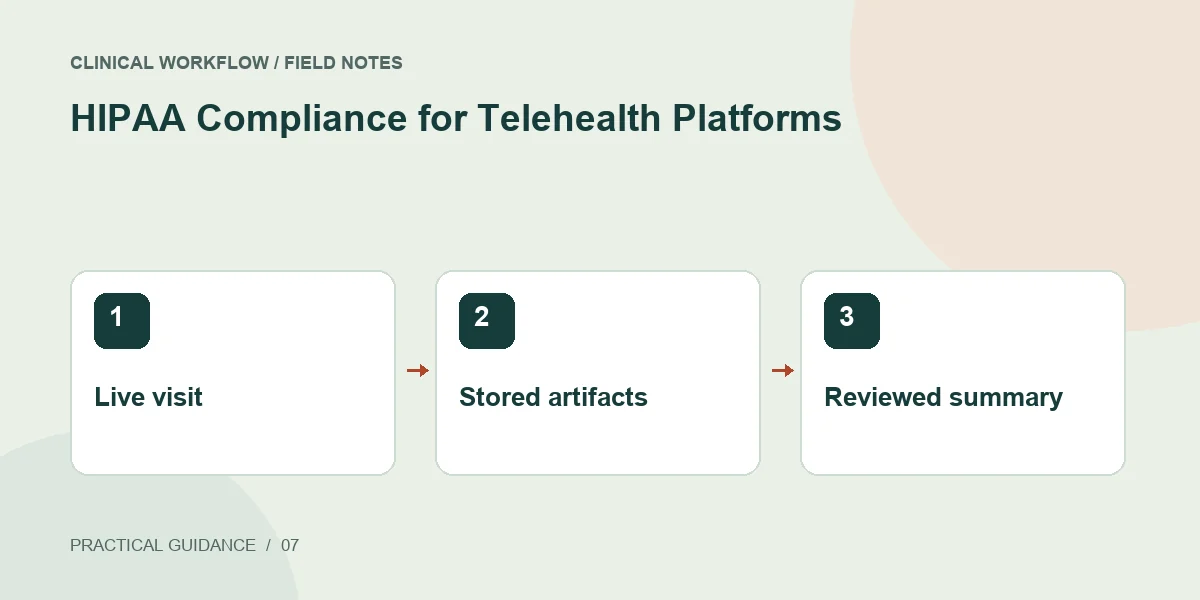
The practical answer
HIPAA responsibilities for a telehealth workflow extend beyond video encryption. Review permitted information use, relevant vendor agreements, safeguards, and operational practices across the services involved.
List every artifact a visit can create
Use a fictional appointment to inspect invitations, intake forms, chat, screen sharing, uploaded files, recordings, transcripts, and generated summaries. Ask which artifacts exist by default and who can enable additional ones. Document where each artifact is stored and who can retrieve it.
Evaluate the actual subscription and configuration. A security statement for the core video service may not answer questions about an optional transcription assistant. Keep feature-level decisions in the approval record so clinicians know what is enabled.
Rehearse the patient-facing workflow
Check how staff confirm the intended participant, handle a companion joining the call, and respond when privacy is uncertain at either location. Use staff procedures appropriate to the clinical context. Recording and consent questions may involve additional law and should be reviewed for the locations involved.
Agree on a fallback when the session fails. Staff need a documented route that fits the practice's approved systems. Rehearse the switch using fictional details; the interruption should not force a clinician to invent a new communication channel during care.
Treat an AI scribe as an additional data flow
After a pilot, ask whether the summary is accurate enough to be useful and whether staff followed the reviewed workflow. Track both findings. Time savings are a result to measure in your practice, not an assumption that should bypass review.
- Identify what audio or text reaches the service.
- Check applicable contractual and vendor arrangements.
- Review retention, support access, and integration destinations.
- Specify clinician review of the generated summary.
- Decide how errors and suspected disclosures are reported.
Sources & scope
Primary references consulted October 22, 2026. Practical exercises and checklists are editorial implementation suggestions, not quoted legal requirements.
Educational content; not legal advice. Confirm current requirements for your organization and jurisdiction. Read our editorial and commercial disclosure.