What is HIPAA compliance for small medical practices
Build a practical HIPAA program for a small medical practice, from staff access and vendor agreements to safer clinical AI workflows.
Practical guidance ↗Less admin. More clarity.
Practical guides for the people behind the practice. Understand the risks, ask better questions, and give your team a clearer path to clinical AI.
10 guides in the first collection · English language
The reading room
Start with the question your team is asking today.
Build a practical HIPAA program for a small medical practice, from staff access and vendor agreements to safer clinical AI workflows.
Practical guidance ↗Understand HIPAA privacy, security, and breach responsibilities and apply the distinctions to everyday clinical AI decisions.
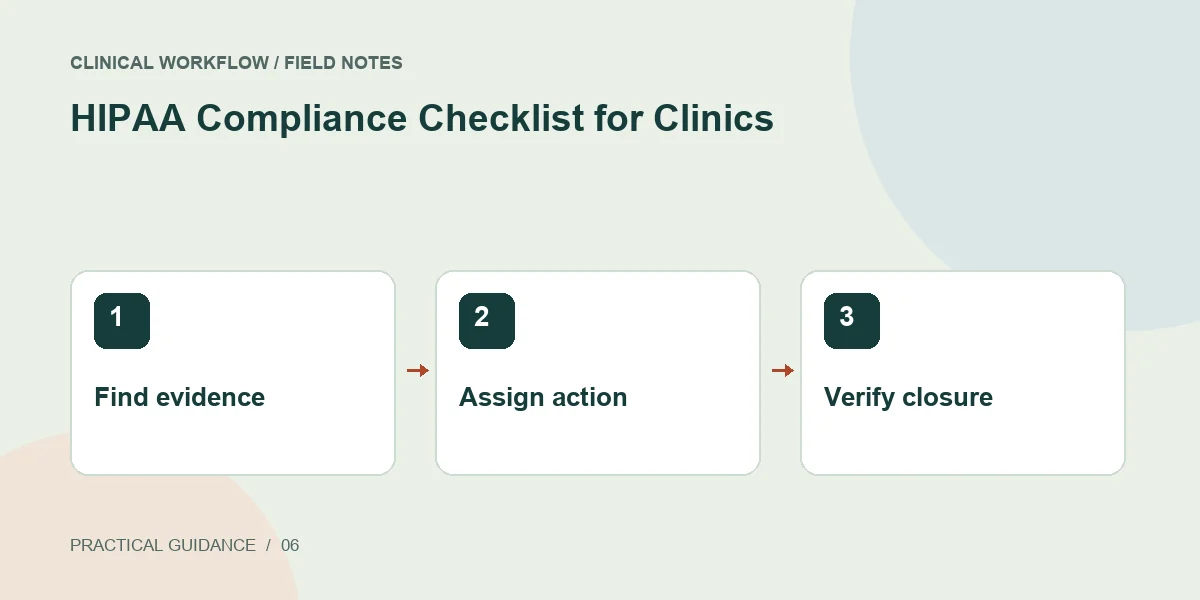
Practical guidance ↗Use an evidence-focused clinic checklist for access, vendors, training, patient requests, incidents, and clinical AI reviews.
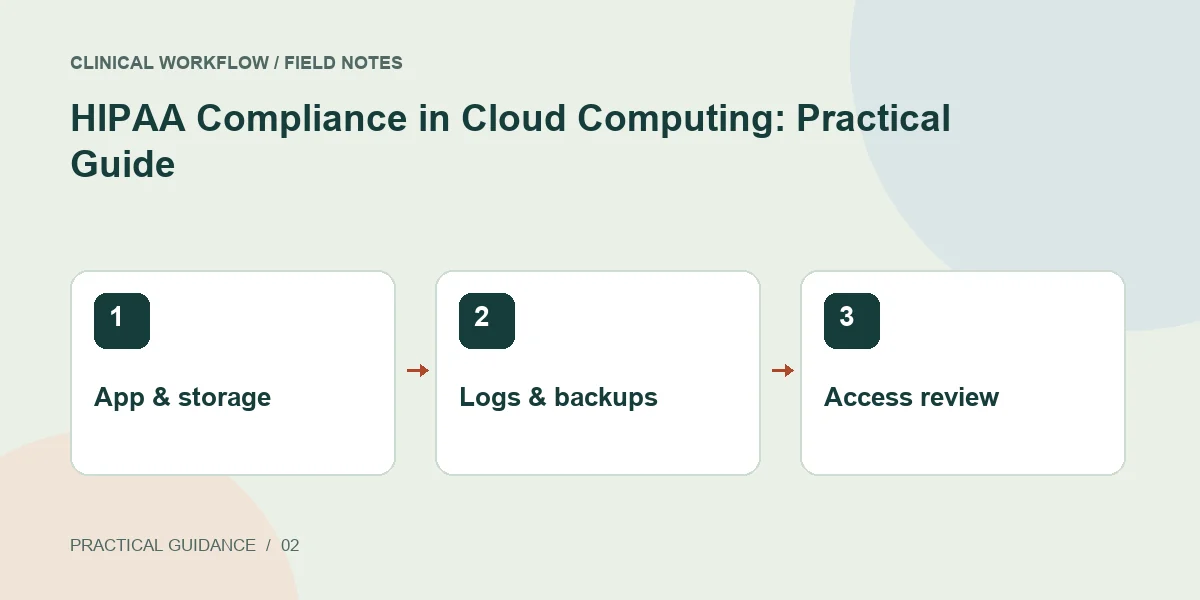
Practical guidance ↗Review cloud data flows, vendor responsibilities, access, backups, and clinical AI integrations before moving patient information.
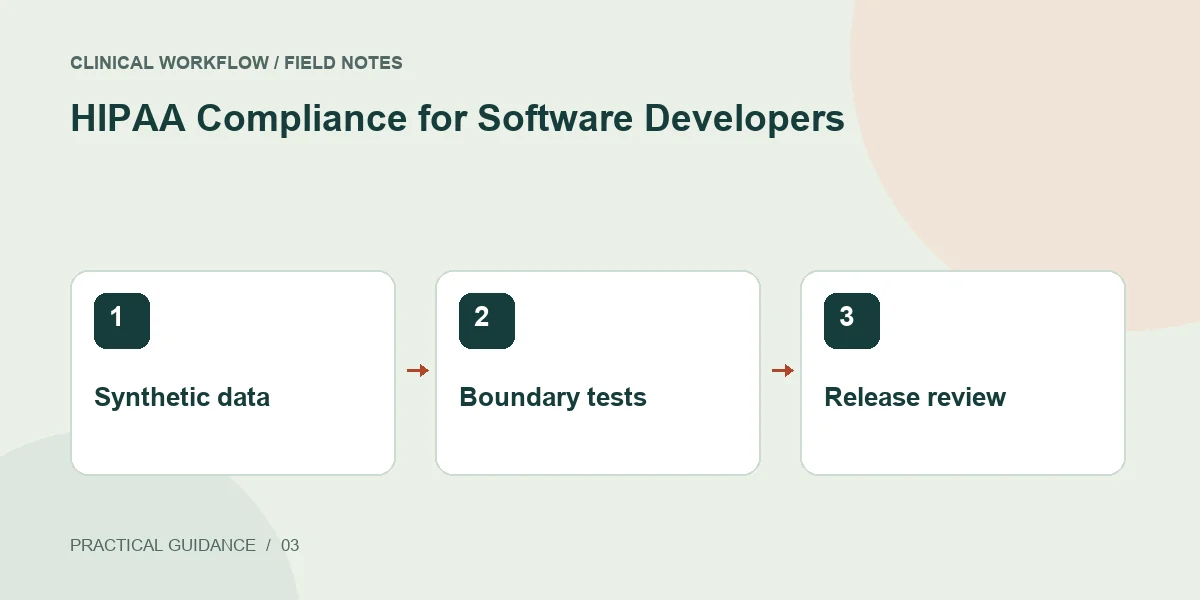
Practical guidance ↗Translate healthcare privacy risks into engineering checks for logs, test data, AI integrations, permissions, and release reviews.
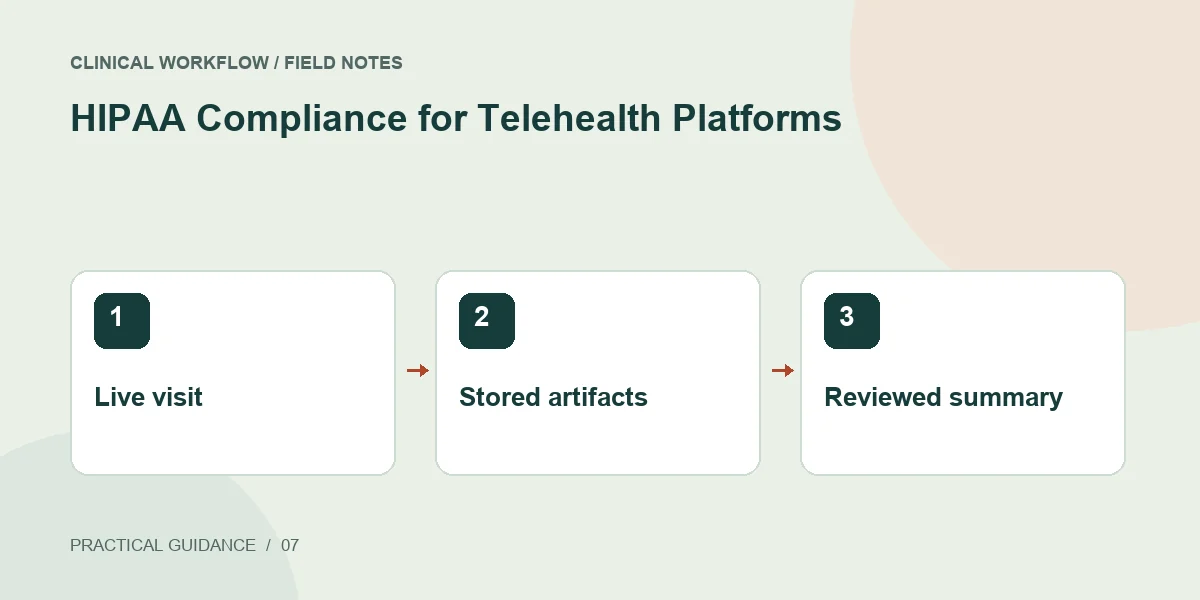
Practical guidance ↗Review the full telehealth journey, including recordings, chat, support access, AI summaries, and platform configuration.
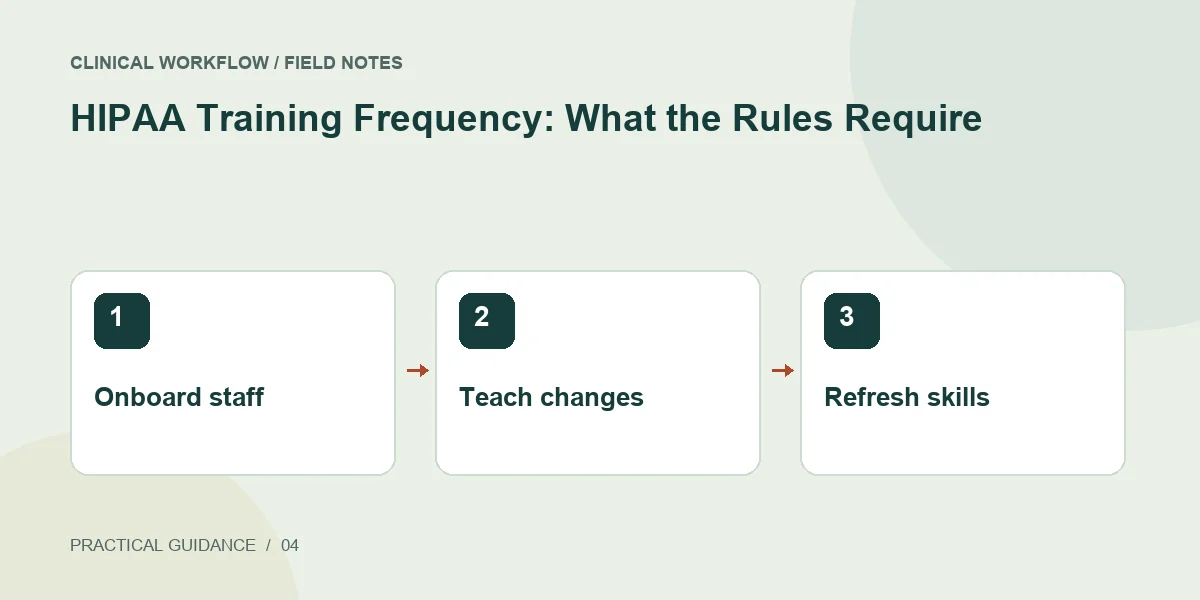
Practical guidance ↗Separate HIPAA training requirements from an annual refresher policy and plan instruction around roles, changes, and observed risks.
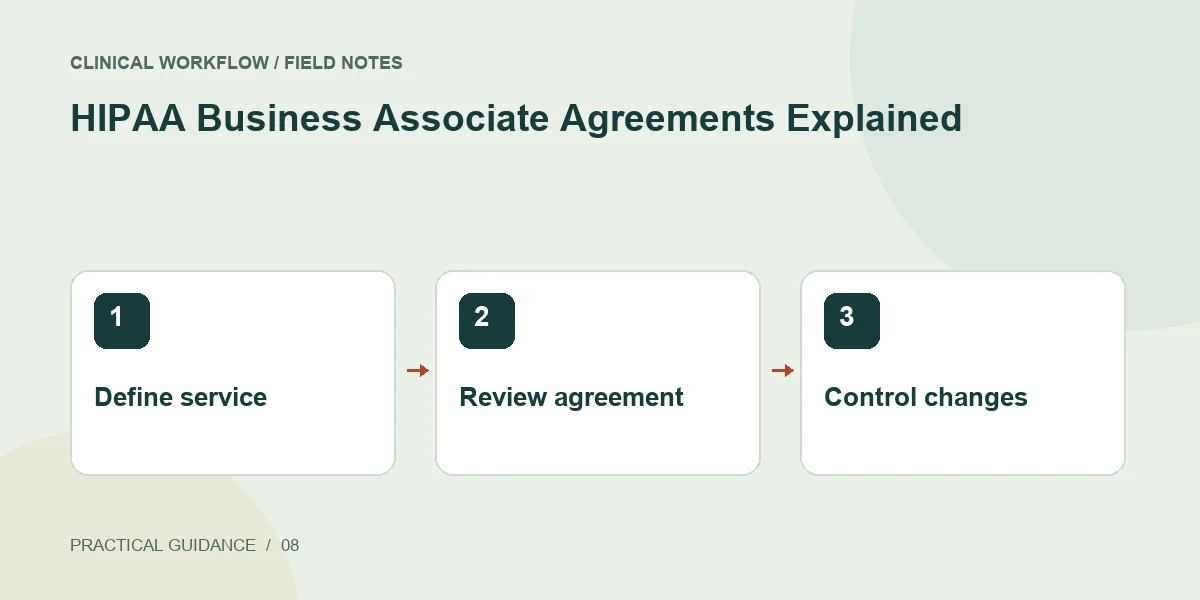
Practical guidance ↗Understand a BAA's role and review vendor services, subcontractors, incident terms, and PHI handling before a clinical AI rollout.
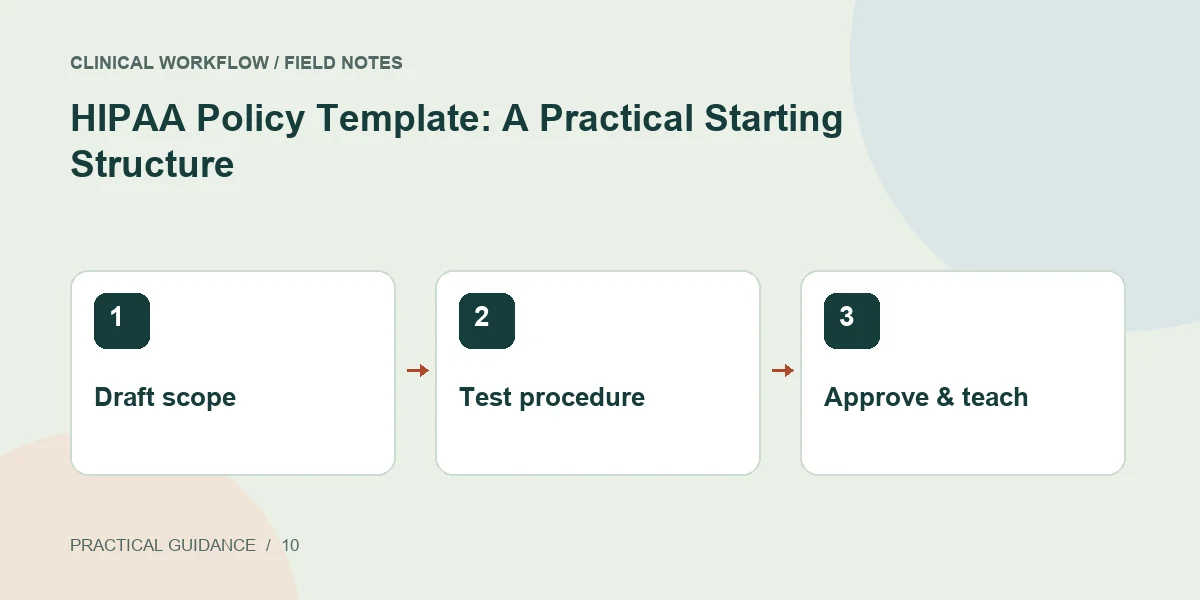
Practical guidance ↗Create a usable HIPAA policy structure with owners, scope, procedures, exceptions, training, and change control for clinical AI.
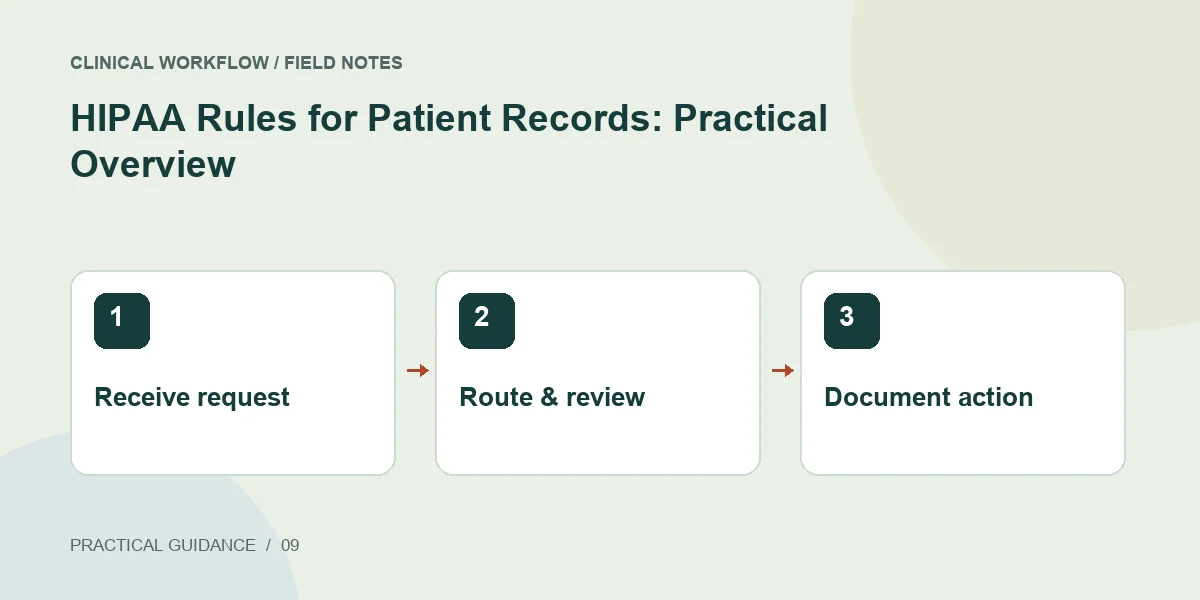
Practical guidance ↗Separate patient access, permitted disclosures, security, and retention questions when designing a medical-record workflow.
Practical guidance ↗