Patient rights · Practical field guide
What is HIPAA compliance rule for patient records
A request for a chart is not the same task as a request to change it. Staff need distinct routes for access, amendment, and disclosure questions.
The practical answer
HIPAA regulates uses and disclosures of PHI and gives individuals rights concerning their records. Electronic records also require security safeguards. Medical-record retention depends on additional applicable law and should not be confused with HIPAA documentation retention.
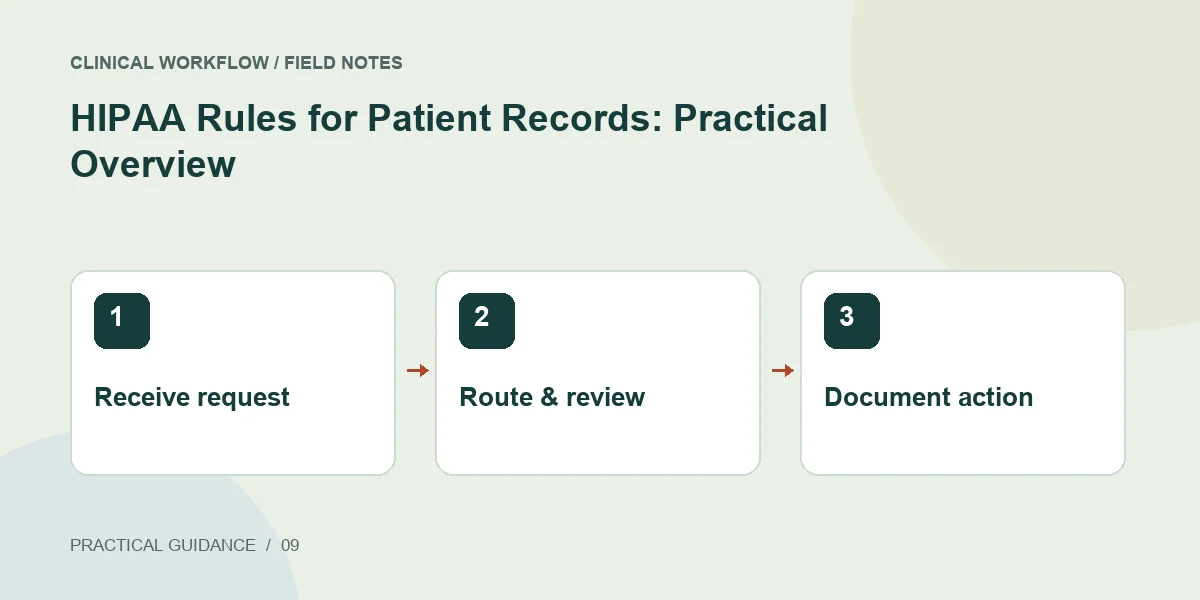
Route the request before collecting paperwork
Train the intake team to distinguish a person requesting their own record from an outside organization asking for information. Use a documented identity-verification and routing process. Avoid making staff decide complex exceptions at the reception desk.
For an internal tracking log, record the request type, date received, responsible person, and next step. Protect the log appropriately and avoid duplicating the entire chart in an administrative tracker. Escalate deadlines and unusual requests to the responsible privacy contact.
Separate retention questions
A clinic should maintain a reviewed retention schedule covering medical records and other record types. Ask which laws and obligations apply to the practice, patient population, and record category. Do not apply a general HIPAA policy-document period to every clinical record.
Before changing a system or deleting old exports, check the approved schedule and any applicable holds. Document who authorizes disposal and how the action is verified. Backup and archive behavior belong in the implementation review so old copies do not become an undocumented exception.
Keep AI drafts in a defined workflow
Use fictional notes when teaching this process. Ask staff to identify an invented statement in a draft and demonstrate the correction route. The exercise tests both clinical review and record handling without putting a real patient's information into a training tool.
- Identify the approved location for source information and drafts.
- Assign clinical review before a draft becomes part of the record.
- Provide a correction route when generated text is inaccurate.
- Review vendor retention and exported copies.
- Keep access and disclosure procedures separate from drafting instructions.
Sources & scope
Primary references consulted October 22, 2026. Practical exercises and checklists are editorial implementation suggestions, not quoted legal requirements.
Educational content; not legal advice. Confirm current requirements for your organization and jurisdiction. Read our editorial and commercial disclosure.