Practice essentials · Practical field guide
What is HIPAA compliance checklist for clinics
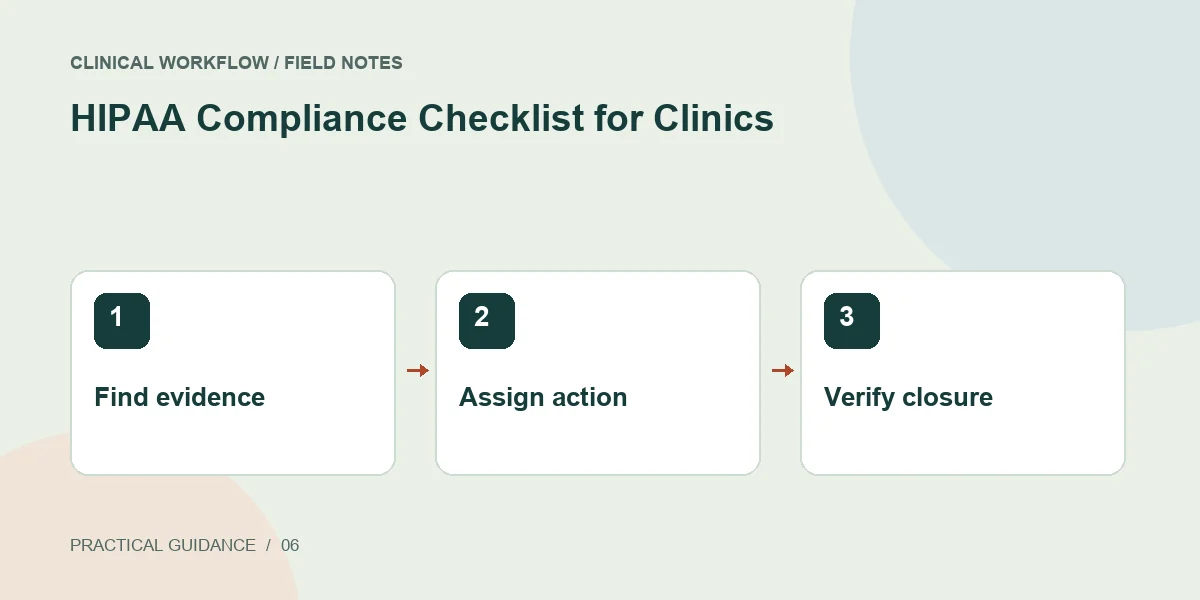
A checked box should point to something the clinic can show. If nobody can find the evidence, the checklist has found its next action.
The practical answer
A clinic checklist is an organizing tool for a broader HIPAA program. Use it to assign ownership and collect evidence; it does not replace a risk analysis or establish compliance by itself.
Run the checklist with evidence beside it
For each row, add an owner, evidence location, last check, and next action. Use a separate status for an unanswered question so uncertainty is visible. Avoid attaching a patient record merely to prove that a procedure exists; a synthetic example may demonstrate the process.
- Inventory: show the current systems and information-flow map.
- Ownership: identify the privacy and security contacts.
- Risk: locate the assessment and unresolved corrective actions.
- Access: demonstrate onboarding, role changes, and termination.
- Vendors: identify applicable BAAs and reviewed service scopes.
- Workforce: locate training records and changed-policy instruction.
- Patient requests: identify the intake and escalation process.
- Incidents: demonstrate reporting and response responsibilities.
- Recovery: show the result of a restoration exercise.
- AI: identify approved accounts, permitted inputs, and reviewers.
Test one control rather than only reading it
Choose the departure process and use a fictional employee. Ask the administrator to identify all accounts that would need to be closed. Compare that list with the inventory. If a transcription portal is missing, update both the inventory and the procedure.
Use the same approach for a backup: identify who can restore it and where the result can be tested. The exercise may reveal an expired credential, an undocumented dependency, or unclear ownership. Record the finding and assign a fix.
Prioritize the next clinic action
Do not let ten low-effort checks hide an unresolved high-impact exposure. Have the responsible team prioritize findings using the practice's risk process. Set a completion date and specify what evidence will demonstrate the fix.
Bring only unresolved items and meaningful changes to the next review. A concise checklist that drives action is easier to maintain than an elaborate spreadsheet that nobody opens. Revisit affected rows after new tools, staffing changes, or a significant incident.
Sources & scope
Primary references consulted October 22, 2026. Practical exercises and checklists are editorial implementation suggestions, not quoted legal requirements.
Educational content; not legal advice. Confirm current requirements for your organization and jurisdiction. Read our editorial and commercial disclosure.